What Is Co-Managed IT and Is It Right for Your Greenville Business
 Adam Quan is the President of Greenville IT Solutions, an award-winning provider of managed IT services to over 200 businesses and nonprofits in the Southeast.

If you’re running a business in Greenville and your IT setup feels like it’s either too much to handle or not quite enough, you’re not alone.
Co-managed IT lets you keep some things in-house while getting support from a managed IT provider for the rest. Understanding what is co-managed IT and how it works helps Greenville businesses decide whether this hybrid approach fits their current needs and growth plans.
Here’s how it actually works and whether it fits what your business needs.
Key Takeaways:
- Co-managed IT blends your internal team with an external provider, sharing responsibilities so Greenville businesses gain specialized expertise without losing control.
- Unlike fully outsourced or in-house models, co-managed IT offers flexible support, cost efficiency, and scalable solutions tailored to mid-sized Greenville companies.
- Before adopting co-managed IT, evaluate your current IT gaps, budget, and growth goals to decide if this hybrid approach fits your business needs.
What Is Co-Managed IT and How Does It Work?
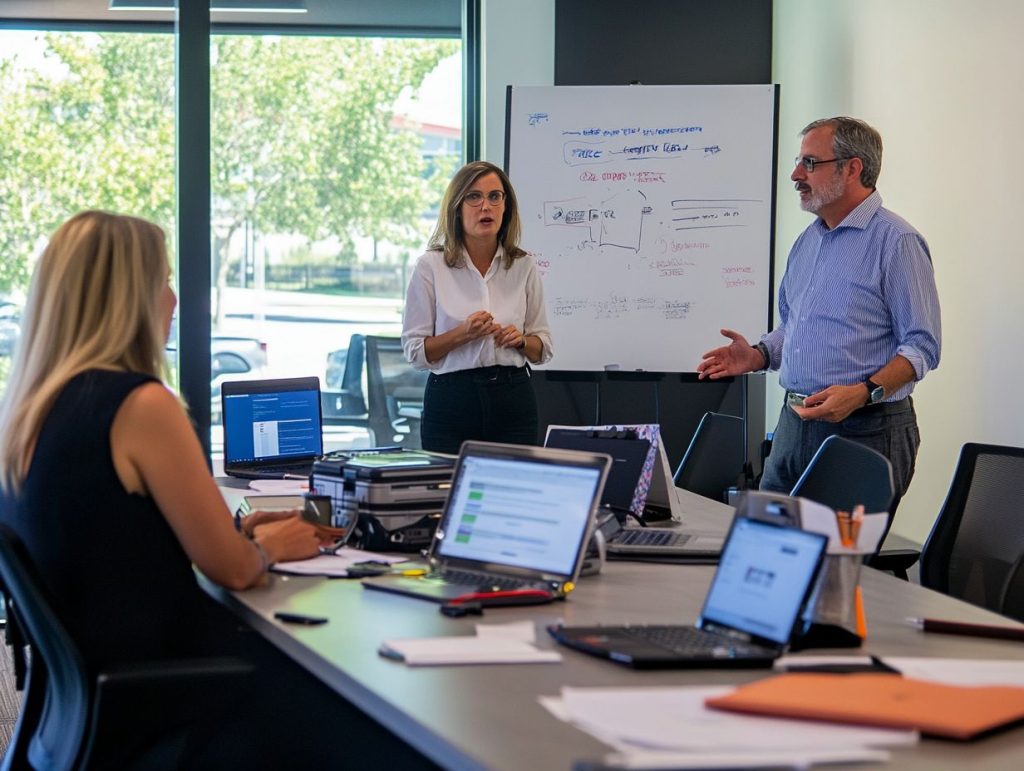
Co-managed IT creates a partnership between your internal IT team and an external managed services provider to share responsibilities across daily operations and strategic projects. This approach allows businesses to keep certain functions in-house while receiving specialized support from an MSP. The model works well for organizations that want to maintain control over some aspects of their technology environment.
Your internal IT team typically handles strategic decisions and company-specific knowledge. They focus on business goals and maintain relationships with other departments. Meanwhile, the MSP manages routine tasks such as network monitoring and help desk support.
This differs from full outsourcing because you retain an IT department with direct oversight. Full outsourcing removes most internal staff and transfers complete control to the provider. Co-managed IT lets you keep valuable team members while filling gaps with external expertise.
Common divisions include the MSP handling 24×7 monitoring, threat monitoring, and incident response. Your staff manages Microsoft 365 policies and user training programs. The provider may also support cloud IT services and data backup operations while your team oversees compliance management requirements. For Greenville businesses asking what is co-managed IT in practice, this shared responsibility model is the clearest answer.
Co-Managed IT vs Traditional IT Models in Greenville
Understanding how co-managed IT differs from traditional IT models helps Greenville businesses select the approach that matches their current resources and goals.
Each model offers distinct tradeoffs in control, expertise, and flexibility. Greenville organizations often evaluate these differences when facing staffing shortages or expanding technology needs.
Fully internal IT, fully outsourced managed services, and co-managed IT represent three common paths. The right choice depends on your existing team size, budget constraints, and strategic priorities.
Many local businesses discover that blending internal knowledge with external expertise creates better outcomes than committing to a single structure. This comparison examines four key areas that influence the decision.
Staffing Structure Comparison
Each model distributes technical responsibilities differently across internal staff and external partners.
Fully internal teams manage all roles in-house. Your IT department handles everything from daily troubleshooting to long-term infrastructure planning without outside assistance.
Fully outsourced models replace internal positions with MSP staff. The managed services provider supplies the entire IT team, and your business operates without dedicated technology employees on payroll.
Co-managed arrangements maintain internal leadership while the MSP fills specific technical gaps. Your IT team retains oversight of strategy and priorities while the managed services partner delivers specialized skills in areas like cybersecurity or cloud services.
This hybrid approach allows Greenville companies to keep institutional knowledge while accessing expertise that would be difficult to hire locally. Our managed IT services Greenville SC are structured specifically to support internal IT teams rather than replace them.
Cost Structure and Predictability
Budget predictability varies significantly depending on whether you maintain full-time staff or leverage managed services agreements.
Fully internal IT requires salary and benefits costs for each employee. Additional expenses include training, certifications, recruitment, and equipment needed to support your technology operations.
Fully outsourced managed services typically involve monthly recurring fees for MSP contracts. These agreements often bundle multiple services into a single predictable payment structure.
Co-managed models split expenses between retained employees and service agreements. You continue paying for key internal positions while adding targeted support for specific functions through your IT partner.
Many Greenville businesses find this middle path reduces unexpected costs associated with IT turnover while avoiding the full commitment of building a complete department.
Response Time and Coverage Differences
Support availability depends on whether your model includes dedicated after-hours monitoring and response capabilities.
Fully internal teams usually provide standard business-hour support. After-hours incidents require on-call staff or delayed response until the next workday.
Fully outsourced MSPs often deliver 24x7x365 Network Operations Center coverage. This continuous monitoring catches issues before they impact daily operations.
Co-managed IT creates hybrid response models where internal staff handles daytime issues while the MSP manages nights and weekends. Your team maintains control during core hours while the managed services provider ensures round-the-clock protection.
This arrangement works well for Greenville organizations that need reliable incident response without staffing overnight shifts internally. Our IT support Greenville SC team provides after-hours coverage that plugs directly into your existing internal structure.
Strategic Planning Involvement
Long-term technology decision-making requires different expertise depending on your chosen model. Internal teams often focus their energy on daily operations, leaving limited time for strategic planning around IT infrastructure and future growth needs. This creates a gap where businesses might miss opportunities to align technology investments with their overall objectives.
In a fully managed services arrangement, MSPs bring broader IT consulting experience to quarterly reviews. These discussions help Greenville companies evaluate their current setup against industry best practices. The external perspective often reveals optimization areas that busy internal staff might overlook during routine tasks.
Co-managed IT relationships blend internal business knowledge with MSP technical recommendations. Your in-house team understands company culture and operational priorities. The managed services provider contributes specialized expertise in areas like cybersecurity Greenville SC and cloud services that may not exist internally.
This collaboration produces technology roadmaps that reflect both practical business requirements and technical possibilities. Regular strategy sessions allow both parties to share insights about emerging tools and potential risks. The resulting plans tend to be more realistic and achievable than those developed in isolation.
Benefits of Co-Managed IT for Greenville Businesses
Greenville businesses often face specific IT challenges that co-managed arrangements address without requiring complete staff replacement.
Many local companies struggle to retain consistent IT talent while managing both daily operations and complex technology demands. Co-managed IT allows organizations to maintain their internal team for business-specific needs while gaining outside support for advanced requirements.
Local presence matters for immediate response, yet many technical tasks benefit from remote monitoring capabilities. This hybrid approach delivers both hands-on assistance when needed and continuous oversight through managed services providers.
As companies expand, technology requirements increase faster than hiring cycles allow. Co-managed IT solutions provide flexible scaling that matches business growth without permanent staffing commitments.
Access to Specialized Expertise Without Full-Time Hires
Co-managed IT provides access to specialized skills that would be difficult to justify as full-time positions.
Internal teams handle routine operations and applications specific to their industry. Meanwhile, the managed services provider contributes cybersecurity specialists, cloud architects, and compliance experts on an as-needed basis.
Greenville organizations gain strategic consultation for IT planning without maintaining enterprise-level staff year-round. This arrangement brings enterprise tools and techniques within reach of mid-sized businesses.
Security operations and incident response receive attention from dedicated professionals. Network management and threat monitoring continue through 24×7 monitoring services that supplement existing help desk coverage. Regulated industries like healthcare and financial services benefit most from this model — our healthcare IT services and financial IT services are both available as co-managed arrangements for organizations with existing internal staff.
Reduced IT Turnover Impact
When key IT staff leave, co-managed relationships maintain operational continuity while replacement hiring occurs.
The managed services provider immediately fills coverage gaps during transitions. Interim leadership becomes available while the organization searches for permanent replacements.
Knowledge transfer to new hires happens smoothly through documented processes. Business continuity remains intact because critical systems stay under active management throughout the change period.
IT turnover creates less disruption when an established IT partner already understands the infrastructure. Project management for ongoing initiatives continues without interruption from personnel changes.
Scalable IT Resources for Growth
Growing Greenville businesses need IT capabilities that expand without requiring proportional staff increases.
Additional project management capacity supports technology implementations during busy periods. Temporary resources become available for specific initiatives without long-term hiring commitments.
Infrastructure scaling occurs through cloud services rather than new hardware purchases. IT resources adjust to match seasonal demands and expansion phases as needed.
Technology partners bring experience across multiple client environments. This shared knowledge base accelerates problem-solving and optimization efforts for growing organizations. Manufacturers in Upstate SC face particular pressure here — our manufacturing IT services are designed to scale alongside production growth without forcing permanent headcount increases in the IT department.
Enhanced Security Without a Dedicated Security Team
Comprehensive security requires tools and monitoring that exceed what most internal teams can maintain independently. Many Greenville businesses find themselves stretched thin when attempting to cover every threat vector with limited staff. A co-managed IT model bridges this gap by connecting internal teams with specialized external resources.
Managed services providers operate Security Operations Centers that deliver 24×7 monitoring across client environments. These centers watch network traffic, user behavior, and system logs around the clock. When suspicious activity appears, trained analysts investigate immediately rather than waiting for business hours.
Security platforms such as XDR and SIEM give MSP teams visibility into threats across multiple data sources. These systems correlate events from endpoints, email, cloud applications, and network devices. The result is faster detection and coordinated response when incidents occur.
Endpoint security management covers laptops, desktops, and mobile devices used throughout the organization. Regular updates, policy enforcement, and malware protection stay consistent even as the workforce grows or changes. Security awareness training delivered on an ongoing basis helps staff recognize phishing attempts and other common risks before they become problems.
Not sure whether co-managed IT or full managed services is the right fit for your Greenville business? We offer a free assessment that maps your current IT environment and helps you see exactly where a co-managed model would fill gaps — and where it would not.
Is Co-Managed IT Right for Your Greenville Business?

Determining whether co-managed IT fits your situation requires honest assessment of current capabilities and future direction.
Many Greenville businesses reach a point where internal IT teams handle daily operations but struggle with specialized projects or emerging security threats. A hybrid model allows organizations to retain control over strategic decisions while accessing external expertise for complex technical work.
Success depends on clarity around which responsibilities stay in-house and which tasks transfer to a managed services provider. Companies that define these boundaries early experience smoother transitions and better results from their IT solutions.
Consider your current team size, upcoming technology initiatives, and tolerance for shared responsibility before moving forward with a technology partner.
Evaluate Your Current IT Workload
Understanding how your internal team currently spends time reveals which tasks could transfer to an MSP.
Start by reviewing help desk tickets from the past several months. Look for patterns around routine issues such as password resets, software updates, and basic troubleshooting that consume significant hours each week.
Next, identify recurring maintenance tasks that occupy staff attention. Activities like patch management, network monitoring, and data backup verification often repeat on predictable schedules and may suit delegation to managed IT services.
Finally, note any projects delayed due to lack of specialized expertise. Initiatives involving cloud migration, cybersecurity assessments, or advanced network configuration frequently stall when internal resources lack necessary technical depth.
Assess Budget and Staffing Constraints
Budget realities often drive the decision between adding internal positions or engaging managed services.
Calculate the full cost of hiring additional IT staff including salary, benefits, training expenses, and ongoing professional development. These figures often exceed initial expectations when organizations factor in recruitment time and potential turnover.
Compare those totals against monthly fees for equivalent services from an IT partner. Many Greenville companies discover that managed IT provides broader coverage at predictable costs without the administrative burden of managing additional employees.
Consider flexibility as well. Managed services allow businesses to scale IT resources up or down based on project demands without long-term staffing commitments that affect overhead expenses.
Identify Strategic Technology Priorities
Co-managed IT works best when internal leadership focuses on business-aligned technology decisions while MSPs execute technical implementation.
Begin by listing upcoming technology initiatives for the next twelve to eighteen months. Include projects related to Microsoft 365 deployment, cloud computing transitions, compliance requirements, and infrastructure upgrades that support business growth.
Determine which initiatives require specialized expertise currently unavailable within your IT department. Cybersecurity assessments, enterprise tool integration, and advanced threat monitoring often benefit from external technical consultation.
Clarify which decisions need to remain in-house versus those suitable for delegation. Strategic IT planning and vendor selection typically stay with internal leadership, while day-to-day network operations and disaster recovery planning transfer effectively to a managed services provider.
Key Questions to Ask Before Choosing Co-Managed IT
The right questions help Greenville businesses evaluate potential MSP partners and clarify expectations before engagement. These discussions reveal how each party contributes to daily operations and long-term success.
Businesses that skip this step often discover gaps in coverage after problems arise. Thoughtful inquiry upfront prevents costly misunderstandings later.
Focus on areas that directly affect your internal IT team and overall IT operations. Clear answers build confidence in the partnership arrangement.
Clarify Division of Responsibilities
Clear responsibility definitions prevent gaps in coverage and conflicts over who handles specific tasks. A documented matrix provides the foundation for effective co-managed IT arrangements.
Create this matrix with your managed services provider before signing any agreement. Include ticket triage procedures, server management duties, and Microsoft 365 administration tasks.
Address network changes, security incident response protocols, and user onboarding processes as well. Each area requires explicit ownership assignment.
Review the matrix quarterly as your IT infrastructure evolves. Updates keep both teams aligned on current expectations and prevent overlap or neglect.
Define Communication and Escalation Paths
Establishing communication protocols ensures issues reach the right people without unnecessary delays. Defined paths protect your IT operations during both routine and urgent situations.
Set regular check-in schedules with your MSP. Identify primary contacts for different issue types across your internal IT team and the managed services provider.
Define escalation timelines for unresolved tickets. Establish emergency contact procedures for critical incidents that affect business continuity.
Document these protocols in writing. Share the information with all stakeholders who might need to initiate support requests.
Review Security and Compliance Expectations
Security responsibilities must be explicitly assigned to avoid dangerous assumptions about who protects what. Cybersecurity requires coordinated effort between your internal team and external IT partner.
Discuss which party monitors security alerts and manages data backup verification. Clarify who conducts recovery testing and maintains compliance documentation.
Determine how security posture reports reach leadership. Address threat monitoring duties and incident response coordination between teams.
Review these expectations whenever regulations change or your IT environment expands. Regular alignment protects your Greenville business from compliance gaps and security oversights. CISA publishes updated cybersecurity guidance that both your internal team and MSP partner should align with when defining shared security responsibilities.
Understand Contract Terms and Flexibility
Contract structure affects your ability to adjust services as business needs change. Greenville businesses should examine minimum commitment periods before signing any agreement. These terms determine how quickly you can modify your arrangement if requirements shift.
Review notice requirements for service changes carefully. Clear guidelines help prevent unexpected costs when adjusting IT coverage or adding new capabilities. Your managed services provider should outline how modifications occur and what approvals are needed.
Project work pricing outside monthly fees requires attention as well. Many organizations need occasional support beyond standard IT services. Understanding these rates prevents billing surprises during infrastructure upgrades or special initiatives.
Provisions for ending the relationship or transitioning to a new provider deserve close review. Exit clauses protect your IT infrastructure and data during provider changes. Strong agreements include data transfer timelines and support during the handover period.
Next Steps for Greenville Businesses Considering Co-Managed IT
Moving forward with co-managed IT requires structured evaluation of your current situation and potential partners.
Greenville businesses often find success when they approach this decision methodically rather than rushing into agreements.
The process begins with honest self-assessment, moves through careful partner selection, and concludes with thoughtful planning for initial engagement.
Each stage builds upon the previous one to create a foundation for successful long-term collaboration.
Conduct Internal IT Assessment
Before contacting providers, document your current IT environment and pain points.
Start by creating an inventory of all systems, applications, and devices currently in use across your organization. This list should include both hardware assets and software platforms such as Microsoft 365 environments and cloud services.
Next, list known issues or gaps that your internal IT team struggles to address consistently. Document staff time allocation to understand where IT resources are being spent on routine tasks versus strategic work.
Finally, identify upcoming projects that will require additional capacity or specialized technical expertise. This assessment reveals where co-managed IT can fill specific needs without duplicating existing capabilities.
Evaluate Potential IT Partners
Selecting the right MSP requires examining their local presence, technical capabilities, and cultural fit with your organization.
Verify that any managed services provider maintains a physical Greenville SC presence with demonstrated response capability for urgent situations. Review their security credentials and the toolsets they employ, including XDR and SIEM platforms for threat monitoring and incident response.
Request references from businesses of similar size and industry to understand how they handle IT operations and help desk support. Pay attention to communication style during initial conversations, as this indicates how well they will connect with your existing IT team.
The right IT partner should demonstrate both enterprise tools and the ability to provide strategic consultation beyond basic IT maintenance.
Define Pilot Scope and Success Metrics
Starting with a defined pilot allows both parties to test the working relationship before full commitment.
Select specific service areas for initial engagement such as after-hours network monitoring or project-based support during busy periods. Establish measurable outcomes including ticket resolution timeframes and rates of issue prevention through proactive maintenance.
Determine a clear review timeline — typically 90 days — to evaluate performance and decide whether to expand the scope. Document expectations around compliance management, data backup procedures, and business continuity support during this phase.
A successful pilot provides both your organization and the managed services provider with concrete evidence of value before scaling the relationship.
Frequently Asked Questions
What is co-managed IT and how does it work for Greenville businesses?
Co-managed IT blends your internal team with an external managed service provider to handle day-to-day tech tasks while you retain strategic control. For Greenville companies, the decision hinges on factors like existing staff expertise, compliance needs, and budget constraints.
How does co-managed IT support regulatory compliance in Greenville?
Local businesses often face industry-specific rules around data security and privacy. A co-managed model lets your team focus on core operations while specialists manage audits, updates, and documentation to keep you compliant without full outsourcing.
What cost savings can Greenville firms expect from co-managed IT?
Instead of hiring full-time experts for every skill gap, you pay for targeted external support. This approach reduces overtime costs and prevents expensive downtime, making it especially useful for growing companies balancing IT needs with other Greenville market expenses.
Can co-managed IT improve cybersecurity for my Greenville business?
Yes. Providers bring advanced monitoring, threat detection, and rapid response that many in-house teams lack. Combined with your staff’s knowledge of company processes, it creates layered protection tailored to local risks like supply chain threats or remote work setups.
How do I evaluate if co-managed IT fits my Greenville company’s size?
Assess your current ticket volume, project backlog, and strategic goals. If your team is stretched thin on maintenance but strong on business priorities, co-managed IT fills gaps efficiently without replacing valued employees.
What questions should I ask potential co-managed IT partners?
Inquire about response times, Greenville-specific experience, integration with your existing tools, and clear division of responsibilities. Transparent agreements ensure the partnership aligns with both your IT roadmap and local operational realities.
Ready to explore what co-managed IT could look like for your Greenville business? We work alongside internal IT teams across Upstate SC — filling gaps, extending coverage, and handling the complex work so your team can focus on what matters most.