Understanding how security policies align with modern frameworks and professional support is vital for organizations seeking to protect their digital assets from evolving cyber risks. A well-built security policy defines the principles and rules for securing sensitive data, ensuring compliance, and supporting a broader strategy for strong cybersecurity Greenville SC.
How to Build a Strong IT Security Policy for Your Company
By
 Adam Quan is the President of Greenville IT Solutions, an award-winning provider of managed IT services to over 200 businesses and nonprofits in the Southeast.
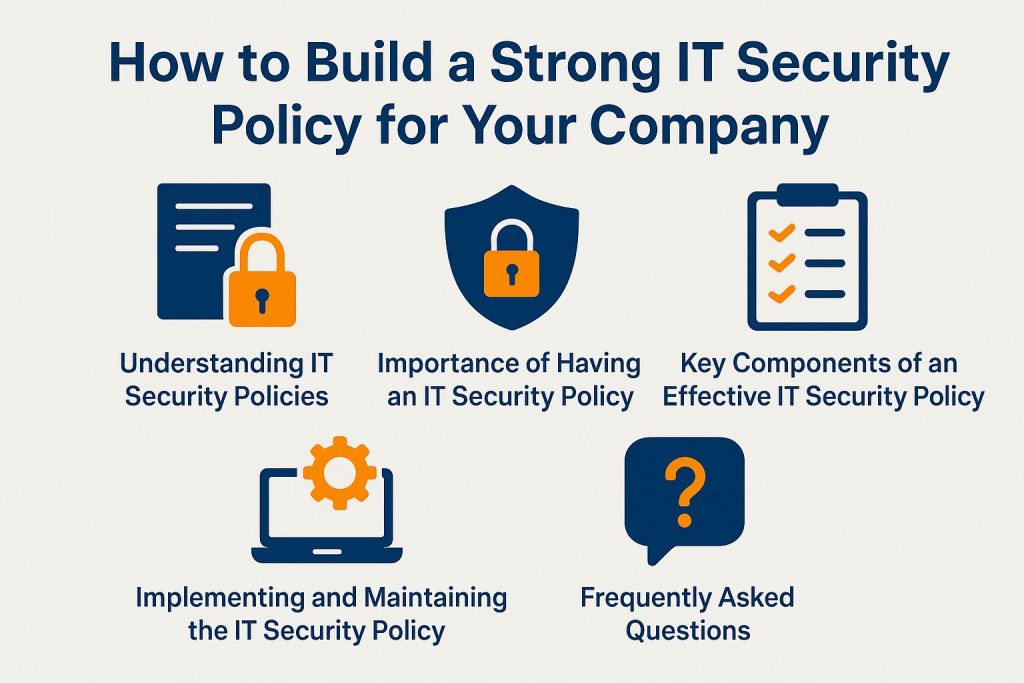
Today, protecting sensitive information is crucial. An effective IT security policy is essential for defending against cyber threats. It provides structured guidelines to protect data, reduce vulnerabilities, and support daily operations. This article explains what an IT security policy is, why it matters, its key components, and how companies can successfully implement one. Readers will learn the essential steps for building a strong security framework aligned with trusted IT security services in Greenville.
Understanding IT Security Policies
By establishing clear expectations, security policies strengthen risk assessment, incident response, employee training, access management, and ongoing monitoring. Most importantly, a strong security policy creates a culture of security awareness—something every Greenville business must prioritize.
What is an IT Security Policy?
An IT security policy is a comprehensive document outlining the security measures, controls, and rules necessary to protect an organization’s information systems from threats. It covers:
-
Risk assessment
-
Access control
-
Data classification
-
Employee responsibilities
-
Incident response
-
Identity management
This policy also ensures compliance with regulatory requirements and builds trust with customers and stakeholders. Clear structure = clear accountability.
Importance of Having an IT Security Policy
Implementing a security policy is non-negotiable for any business. It reduces exposure to threats, ensures compliance, protects sensitive information, and establishes a predictable approach for managing risk.
Risks of Not Having an IT Security Policy
Without a formal policy, your company becomes vulnerable to:
-
Data breaches
-
Ransomware attacks
-
Compliance violations
-
Financial and legal penalties
-
Reputational damage
A single breach can disrupt operations for months. At minimum, organizations must maintain an incident response plan and measurable security performance indicators.
Strengthening these areas often requires expert-driven Greenville cybersecurity solutions.
Key Components of an Effective IT Security Policy
A strong security policy includes several core pillars that work together to form a proactive cybersecurity framework.
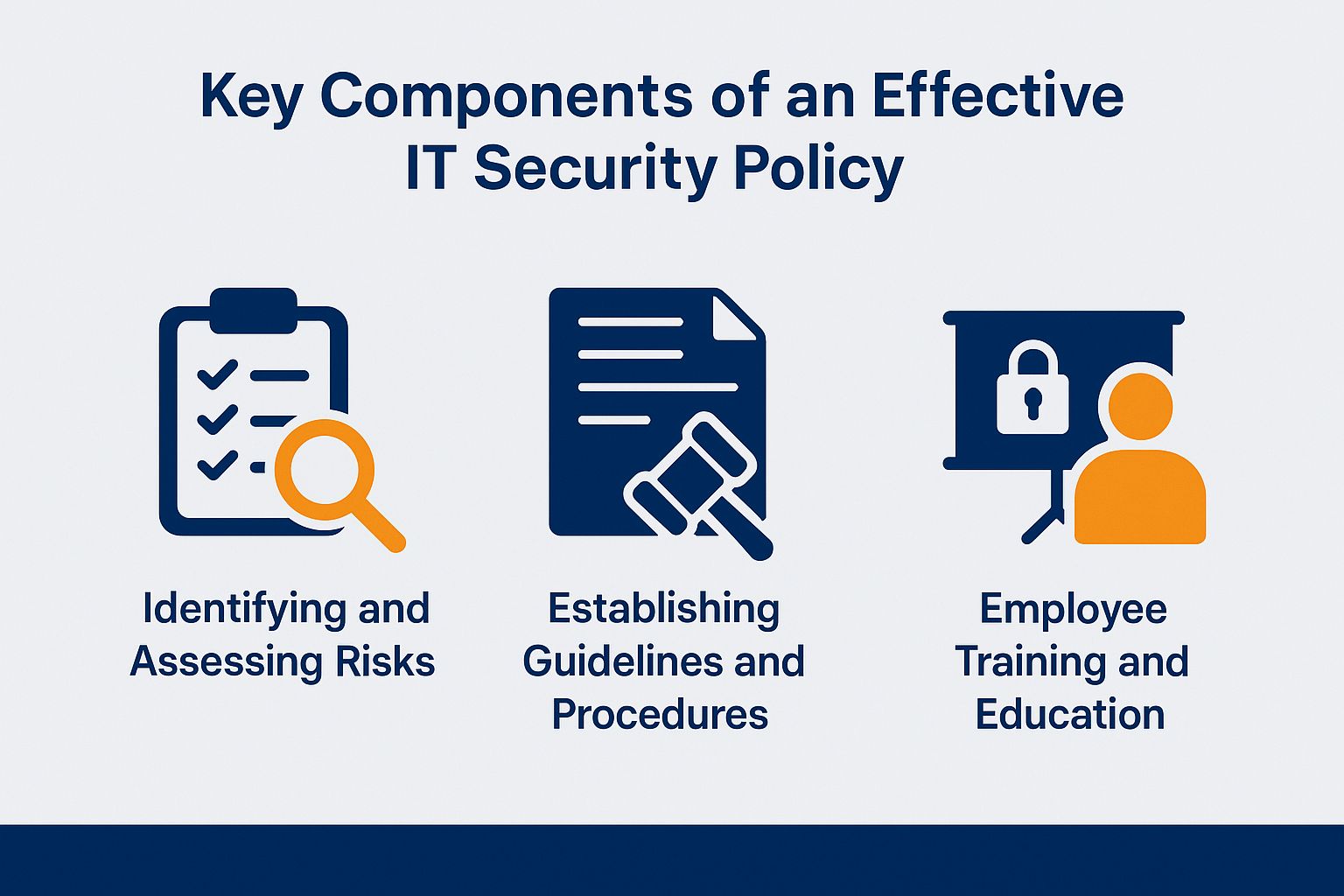
Identifying and Assessing Risks
Effective policies begin with a full risk assessment:
-
Asset inventory
-
Vulnerability scanning
-
Threat modeling
-
Patch management
-
Deployment of controls
Using threat intelligence helps identify which systems are most likely to be targeted—and which controls should be implemented first.
Establishing Guidelines and Procedures
Guidelines ensure every employee understands:
-
What to do
-
What not to do
-
Who is responsible
-
How to report issues
-
How to protect sensitive information
Employee clarity = fewer mistakes. Fewer mistakes = fewer incidents.
Employee Training and Education
Employees are the #1 attack vector.
Training must cover:
-
Phishing awareness
-
Password management
-
Proper data handling
-
Incident reporting
-
Safe internet practices
Simulated attacks, workshops, and online training tools can dramatically reduce risk.
Implementing and Maintaining the IT Security Policy
Implementing and maintaining an IT security policy is a continuous process. It requires effective communication, ongoing training, and regular updates to adapt to evolving cybersecurity challenges, as mentioned in our guide to cybersecurity best practices for businesses.
Organizations must prioritize these elements to ensure robust security measures are in place and to mitigate potential risks effectively.
Communication and Enforcement
Effective communication and enforcement, along with security documentation, are essential for ensuring that all employees comprehend the IT security policy and adhere to its requirements, thus fostering a robust security culture within the organization.
Organizations can use strategies like regular training sessions and interactive workshops. These engage employees in discussions about cybersecurity threats and best practices.
- Make the policy documentation clear and easy to access.
- Use newsletters or internal channels to communicate regularly about the policy.
The establishment of feedback mechanisms helps employees express concerns and ask questions. This promotes ownership of security practices.
In terms of compliance enforcement, integrate policy adherence into performance evaluations and use incident management systems to report violations. This helps all employees understand their responsibilities and the consequences of non-compliance.
Regular Updates and Reviews
Cyber threats evolve constantly. Your policy should, too.
Organizations should:
-
Conduct annual (or quarterly) security audits
-
Perform vulnerability assessments
-
Update policies after major tech changes
-
Reassess compliance requirements
This proactive approach directly strengthens your overall security posture.
Frequently Asked Questions
1) What is an IT security policy and why is it important?
It is a set of documented rules and controls designed to protect sensitive information, reduce cyber risks, and establish compliance across the organization.
2) How do I begin building an IT security policy?
Start with a risk assessment, then define needed controls (encryption, firewalls, access rules). Consult professionals if needed to ensure full coverage.
3) What should be included in an IT security policy?
Password requirements, encryption rules, remote access guidelines, device policies, incident response, and data handling procedures.
4) How often should the policy be updated?
At least annually—or after any major IT, compliance, or operational change.
5) How can I ensure employees follow the policy?
Training, audits, monitoring, and clear consequences for non-compliance.
6) What should I do if there’s a breach even with a policy in place?
Follow the documented incident response plan: contain, investigate, notify, remediate, and implement additional protections.

Adam Quan
Adam Quan is the President of Greenville IT Solutions, an award-winning managed IT services provider serving over 200 businesses and nonprofits in the Southeast. Under his leadership, the company has become a staple in the Southeast IT landscape, known for its cutting-edge IT solutions, meticulous cybersecurity, and exceptional client support.