Why Cybersecurity Is Crucial for Small Businesses
 Adam Quan is the President of Greenville IT Solutions, an award-winning provider of managed IT services to over 200 businesses and nonprofits in the Southeast.
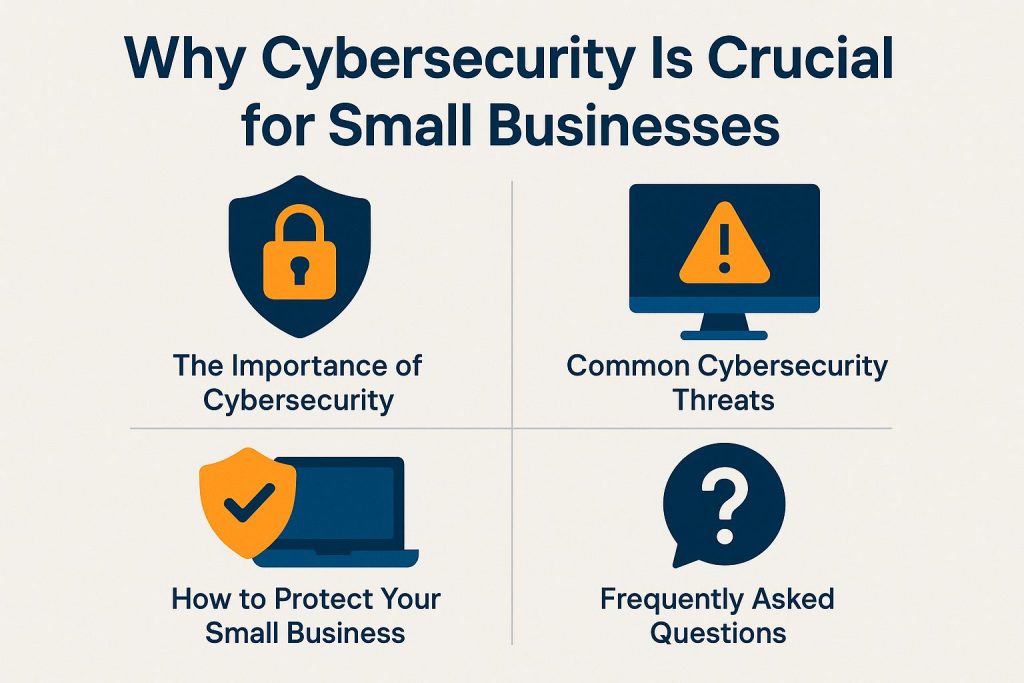
Small businesses face many cybersecurity threats that can harm their operations and reputation—especially those handling sensitive financial data. With limited resources and heightened vulnerability, organizations that rely on financial IT services must understand the risks and consequences of cyber attacks. From phishing schemes to ransomware, these threats can have devastating effects.
This article explains why cybersecurity is important for small businesses, outlines common threats, and offers strategies to protect against attacks. These steps help businesses—particularly those dependent on financial IT services—stay strong in an unpredictable online environment.
The Importance of Cybersecurity for Small Businesses
Cybersecurity is essential for small businesses today. They often lack the technical infrastructure or dedicated personnel to protect against sophisticated cyber threats.
These businesses must safeguard their digital assets, comply with data privacy regulations, and maintain customer confidence. A proactive approach to risk management is crucial.
Partnering with local experts in cybersecurity greenville sc helps small businesses strengthen their defenses while focusing on growth and daily operations.
Effective cybersecurity measures protect sensitive information, ensure business continuity, and uphold brand reputation — all critical factors for long-term success.
Risks and Consequences of Cyber Attacks
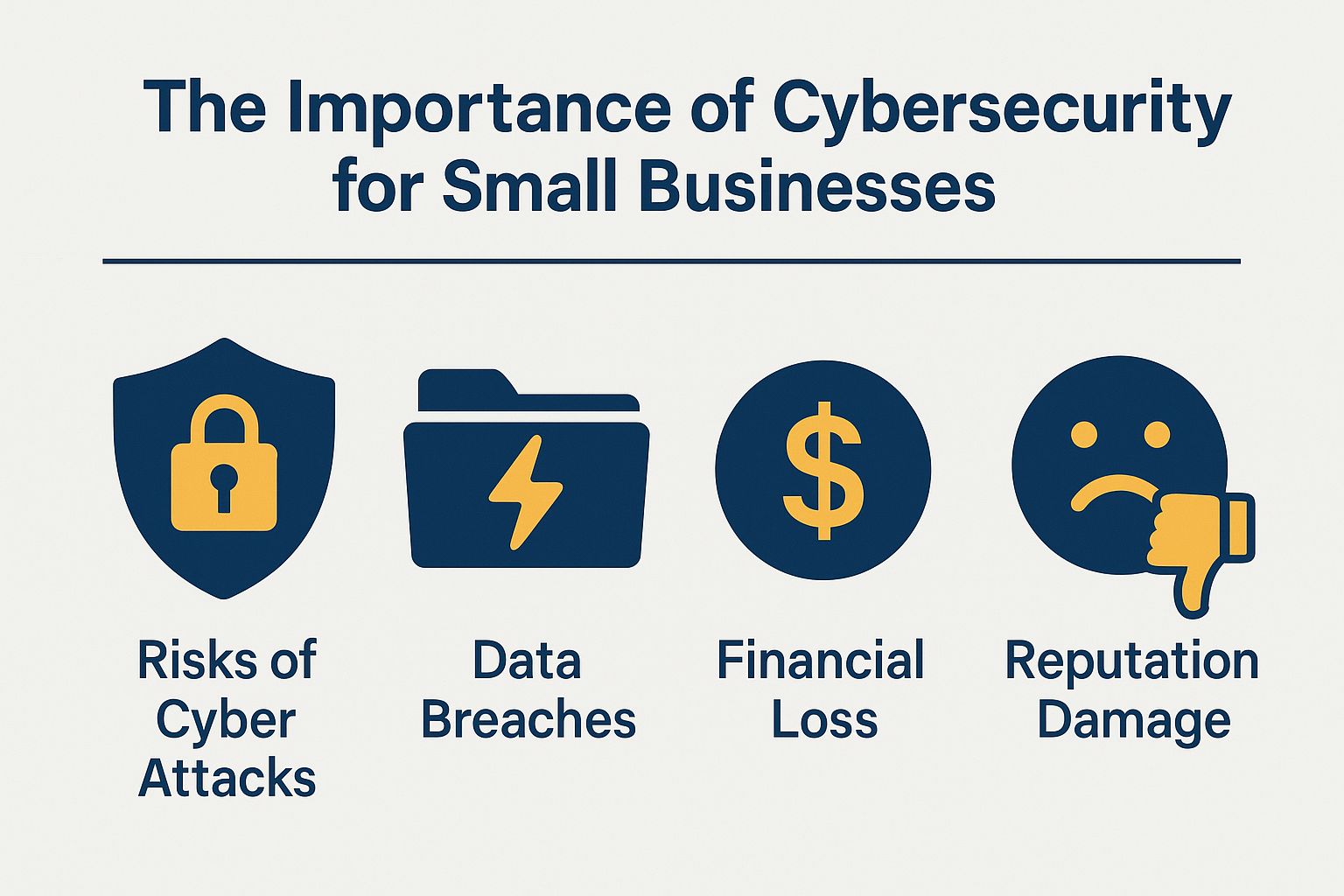
Cyber attacks pose serious risks to small businesses, leading to:
-
Financial losses
-
Operational disruption
-
Reputational damage
-
Regulatory fines
These incidents can stem from phishing, malware, or ransomware — each capable of crippling essential business functions. The impact often extends beyond immediate costs, resulting in lost clients and lasting trust issues.
Research shows that 43% of cyber attacks target small businesses, and 60% of those affected close within six months of an incident. This highlights how vulnerable smaller organizations can be without proper protection.
To minimize risk, many Greenville companies invest in greenville cybersecurity services.
Common Cybersecurity Threats for Small Businesses
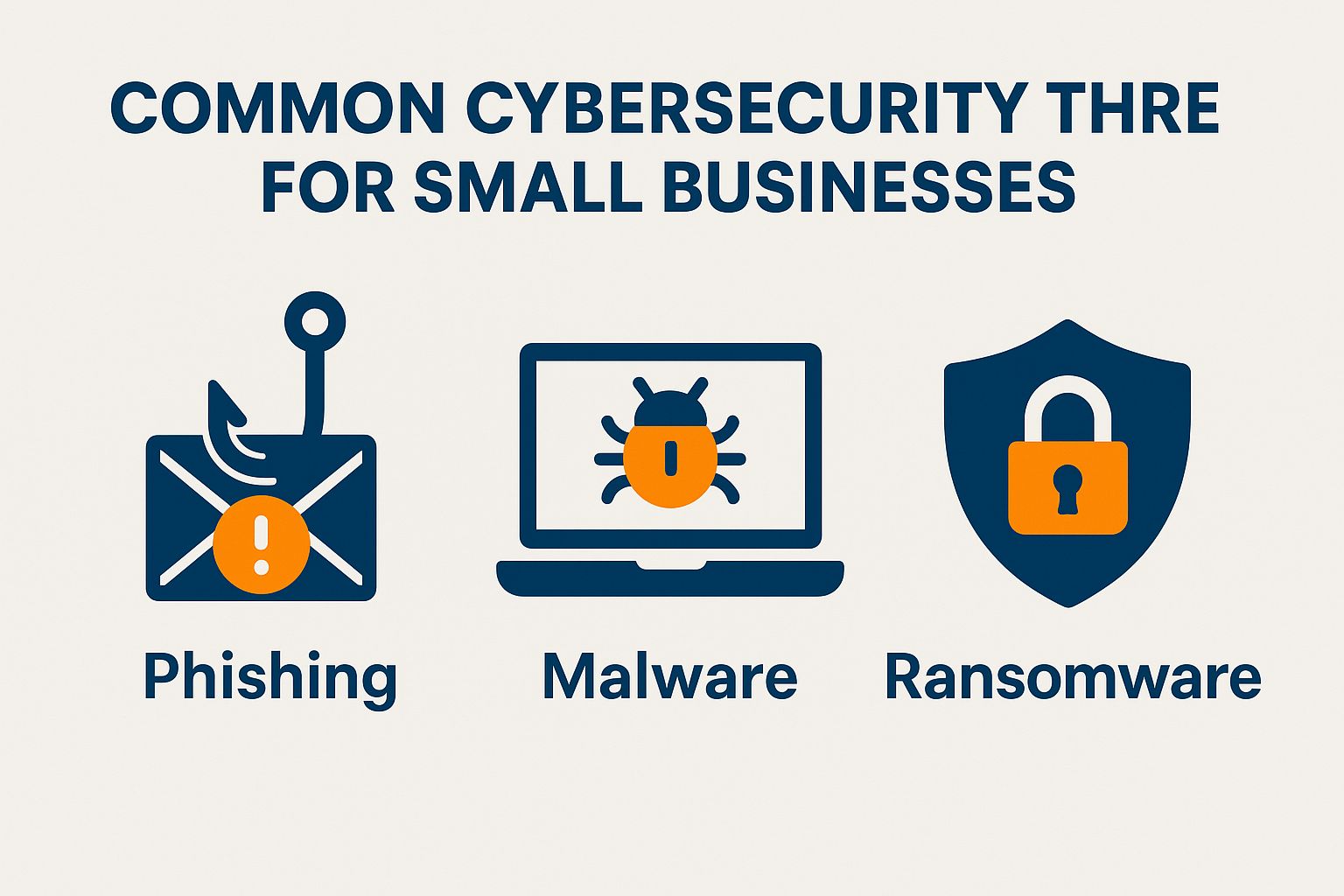
Cybercriminals increasingly target small businesses because they’re seen as easier entry points. Common threats include:
-
Phishing – deceptive emails designed to steal credentials
-
Malware – malicious software that infiltrates systems
-
Ransomware – locks data until payment is made
Attackers also exploit human behavior, using social engineering to trick employees into revealing confidential information or clicking unsafe links.
To reduce exposure, small businesses must prioritize employee awareness, implement firewalls, and conduct regular system updates.
Many find that aligning with specialists in it security services greenville
provides comprehensive monitoring, rapid response, and continuous protection.
.
Phishing, Malware, and Ransomware
Phishing, malware, and ransomware are significant threats. Each requires tailored strategies for detection and response. Effective identity theft protection can further safeguard sensitive information.
These threats can greatly harm a company’s finances and reputation. For example, an employee might get an email that looks real but has a harmful link. This can lead to unauthorized access to sensitive databases. Similarly, malware can hide in a company’s systems. It may collect passwords or customer information secretly. This can lead to high costs for data recovery and loss of client trust. Ransomware attacks can disrupt operations. Companies must weigh the risks of paying a ransom against the costs of downtime.
To address these vulnerabilities, it is essential for small businesses to adopt best practices such as:
- Regular software updates
- The implementation of robust firewalls
- The use of multi-factor authentication
Also, regular cybersecurity training can help employees recognize these threats. This builds a vigilant workforce that can respond quickly to incidents.
How to Protect Your Small Business from Cyber Attacks
Protection starts with a layered security strategy. Small businesses should:
-
Conduct regular cybersecurity training for all employees
-
Use multi-factor authentication to secure accounts
-
Perform routine vulnerability scans and audits
-
Keep software and systems up to date
-
Create a clear incident response plan
Ongoing security assessments ensure that risks are identified before they become breaches. Businesses should also maintain data backups to minimize downtime and loss after an attack.
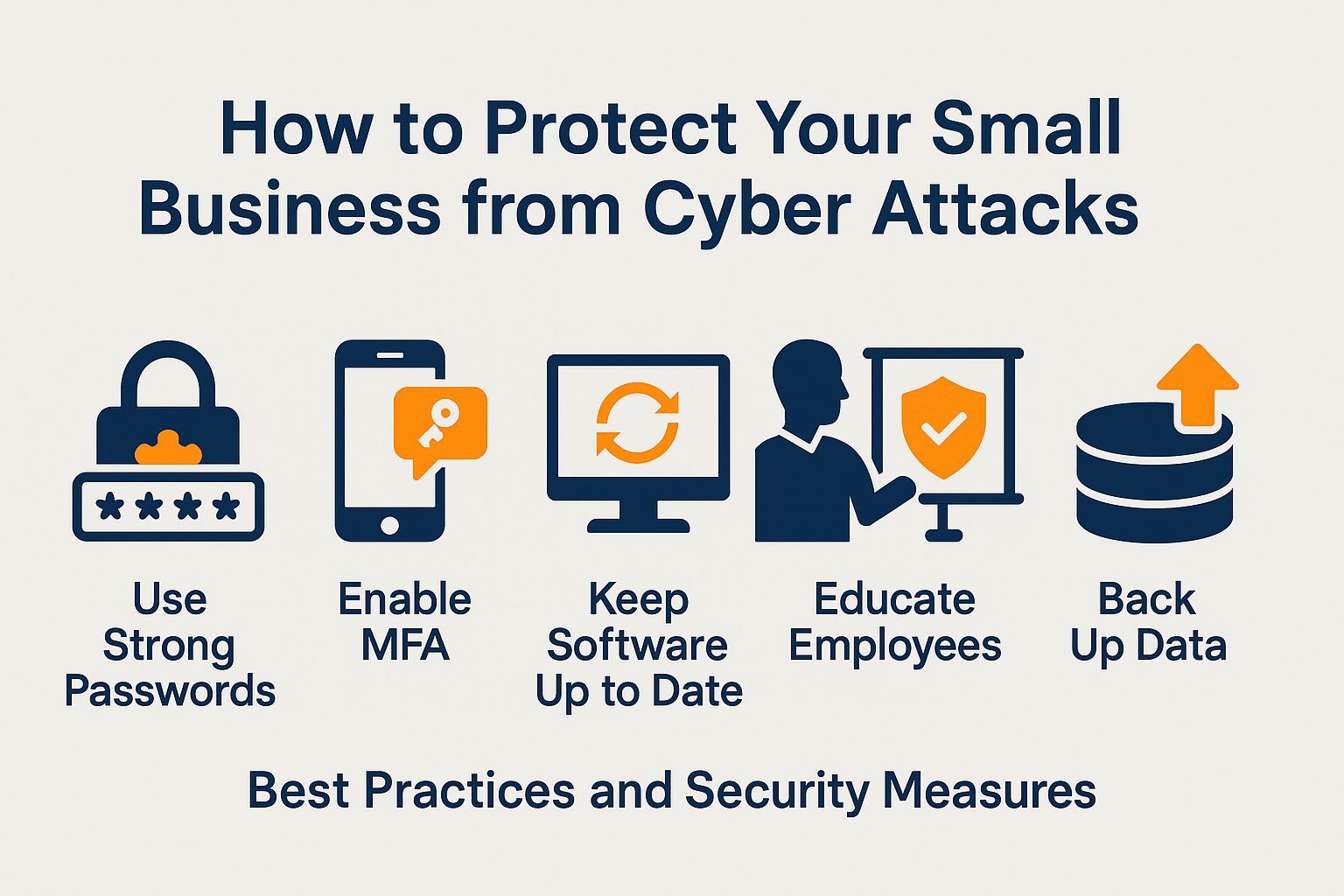
Best Practices and Security Measures
To enhance resilience, small businesses should follow these best practices:
-
Strong password policies – require unique, complex passwords
-
Encryption – secure sensitive customer and financial data
-
Zero Trust principles – verify every user and device
-
Endpoint protection – safeguard all devices connected to the network
-
Routine security audits – identify and fix weaknesses
Adopting these measures creates a culture of cyber awareness and accountability, ensuring employees actively contribute to data protection and compliance
Frequently Asked Questions
Why is cybersecurity crucial for small businesses?
Because small businesses are prime targets due to their limited security infrastructure and lack of dedicated IT personnel.
What are the consequences of a cyber attack?
A successful attack can cause financial loss, downtime, reputational damage, and legal penalties.
What are common cyber threats small businesses face?
Phishing scams, malware, ransomware, and insider threats are the most frequent.
How can small businesses protect themselves?
By updating systems, training staff, using firewalls, and creating an incident response plan.
Why invest in professional cybersecurity services?
Because it reduces the risk of data loss, ensures compliance, and gives peace of mind knowing your systems are monitored by experts.